


generator room acoustics
In an era defined by constant connectivity and uninterrupted operations, the generator stands as a symbol of power reliability. From hospitals and data centers to manufacturing plants and construction sites, these machines are the unsung heroes that keep our world running. However, this critical function comes with a significant and often disruptive side effect: noise. The powerful rumble of a generator can easily exceed 100 decibels (dB), a level that poses a serious threat to human hearing, violates local noise ordinances, and can lead to a host of health problems. Effectively managing this noise is not just a matter of courtesy; it is a critical operational requirement. This is where a deep understanding of generator room acoustics and the right soundproofing solutions become essential. By proactively addressing noise, we can ensure a safer, more compliant, and more productive environment.
Sound Attenuator: The Key to Airflow Noise Control
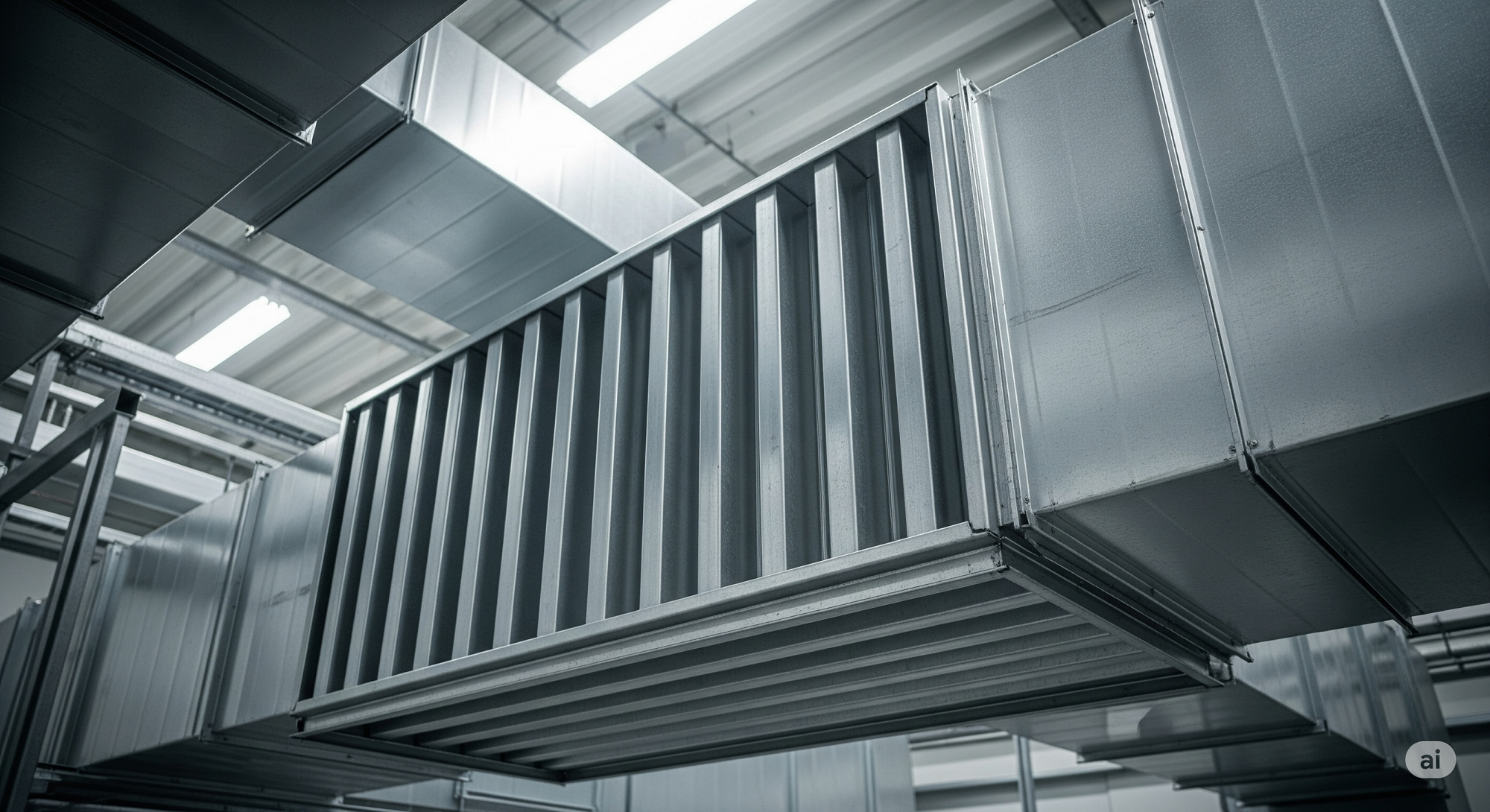
When a generator is housed within a dedicated generator room, the focus of acoustic management shifts from containing the noise to meticulously controlling its behavior within the existing space. A sound attenuator, often referred to as an acoustic silencer or louver, is a cornerstone of this strategy. It is a passive device specifically engineered to reduce noise traveling through an air duct or opening while allowing for the free and necessary passage of air—a vital function for a generator’s cooling and combustion systems.
How They Work
At its core, a sound attenuator is a carefully designed maze for sound waves. Its structure is composed of a series of parallel acoustic baffles, or “splitters,” which are typically made from perforated metal and filled with high-density, sound-absorbing material like mineral wool or rock wool. The design is based on the principle of absorption and reflection. As air (and the accompanying sound waves) passes through the attenuator, the sound waves are forced to ricochet off the baffles and are absorbed by the porous infill material. This process significantly reduces the sound energy without impeding the critical airflow needed to prevent the generator from overheating.
Key Applications in Generator Room Acoustics
In the context of generator room acoustics, sound attenuators are strategically installed at key points of air movement:
- Air Intake: The substantial volume of air required for the generator’s combustion and cooling processes is a primary source of airborne noise. An attenuator on the air intake opening effectively mutes the sound of the engine drawing air into the room, which can be a loud, low-frequency hum.
- Air Discharge: The hot air that is expelled from the room after cooling the engine also carries a significant amount of noise. An attenuator on the discharge vent ensures this noise does not escape into the surrounding environment, a crucial step for controlling noise pollution outside the building.
These attenuators are not one-size-fits-all solutions. They are custom-engineered based on the specific airflow requirements of the generator, the required level of noise reduction, and the available space. They are an indispensable part of a comprehensive acoustic strategy for any generator room.
Acoustic Enclosures: The All-in-One Noise Containment Solution
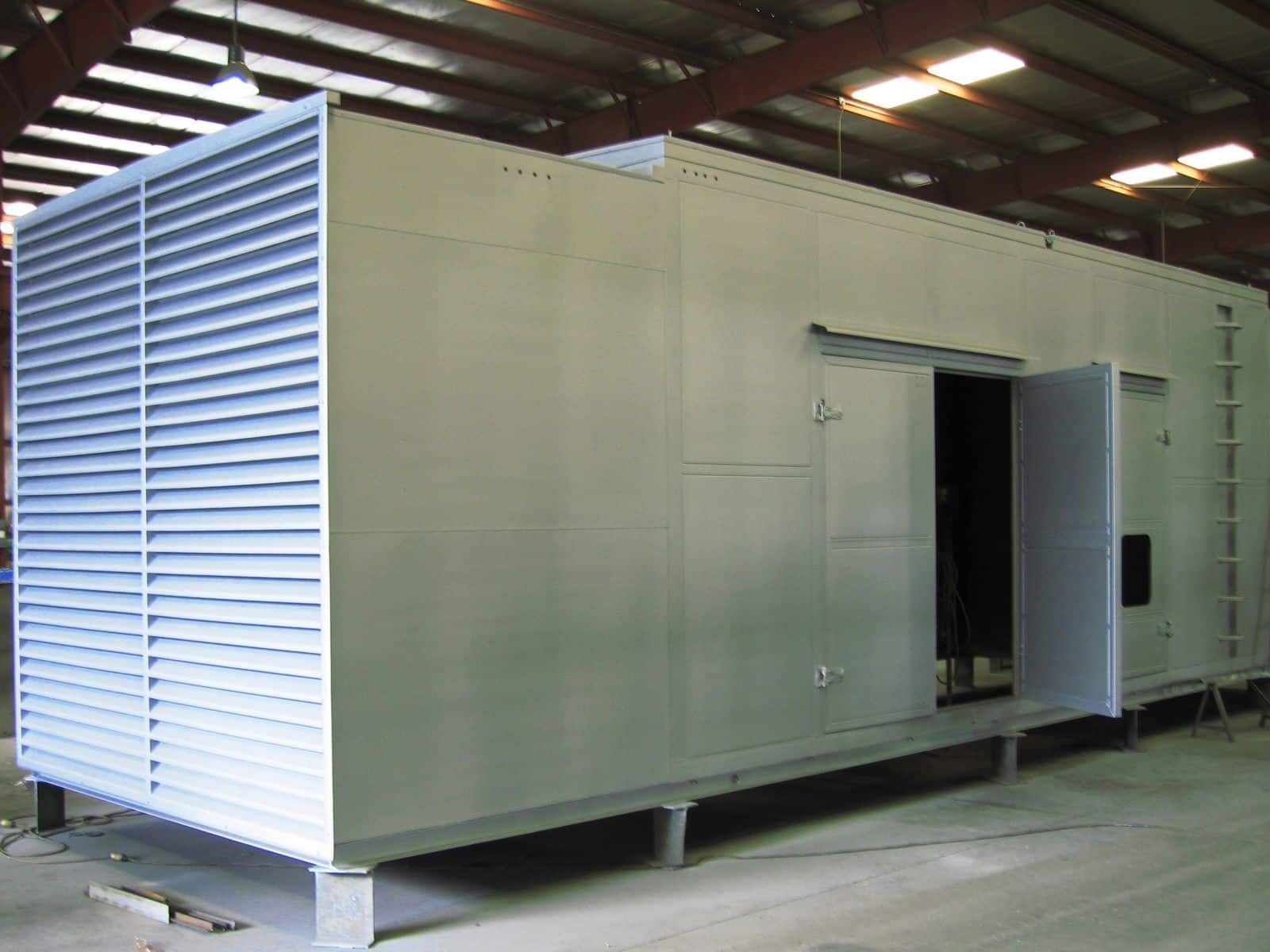
For generators situated outdoors or in open-air settings, a full acoustic enclosure is the most effective and comprehensive solution for noise mitigation. These are custom-built, purpose-designed structures that completely surround the generator, creating a self-contained acoustic barrier that traps, manages, and redirects all sources of noise.
Construction and Materials
A high-quality acoustic enclosure is typically fabricated from heavy-gauge, corrosion-resistant steel. The walls are meticulously lined with a composite of sound-absorbing materials, such as high-density mineral wool, acoustic foam, or rock wool. The inner layer is designed to absorb the generator’s sound waves, while the robust outer shell provides a physical barrier to prevent noise from escaping. All seams and joints are sealed with high-performance acoustic gaskets to ensure an airtight seal, as even a small gap can compromise the entire system’s performance.
Engineered for Performance
These are not merely soundproof boxes; they are sophisticated, weatherproof systems engineered for optimal performance. They are designed with specialized silenced louvers for air intake and exhaust, ensuring adequate ventilation without compromising the sound barrier. Furthermore, high-performance exhaust silencers are often integrated directly into the enclosure’s design to tackle the loudest single source of noise. Critical access points, such as doors for maintenance and transparent windows for monitoring, are also sealed with acoustic gaskets to maintain the integrity of the acoustic seal. Many modern enclosures also include integrated fire suppression systems for added safety.
Vibration Isolation
A fundamental feature of any effective enclosure is vibration control. The generator is typically mounted on anti-vibration pads or a floating floor system within the enclosure. This crucial step prevents the engine’s powerful vibrations from transferring to the enclosure’s frame and the ground, thereby stopping the propagation of structure-borne noise.

The Comprehensive Approach to Generator Room Acoustics
While sound attenuators and acoustic enclosures are the primary solutions, a truly effective generator room acoustics strategy often requires a multi-layered approach.
- Internal Room Treatment: For generators inside a room, treating the interior surfaces is vital. The hard surfaces of concrete walls and floors can cause sound to bounce and reverberate, amplifying the noise within the space. Installing sound-absorbing panels or baffles on the walls and ceiling significantly reduces reverberation, leading to a quieter overall environment. These panels are often made of fiberglass or mineral wool wrapped in a perforated fabric.
- Vibration Control: Differentiating between airborne and structure-borne noise is key. While enclosures and attenuators address airborne noise, a crucial part of noise control is isolating the source of vibration. Vibration isolators—such as rubber pads, spring mounts, or a full floating floor system—are installed under the generator’s base to absorb the mechanical vibrations and prevent them from traveling through the building’s structure.
- Addressing Flanking Paths: Sound is like water; it will find the path of least resistance. Flanking paths are indirect routes for sound to escape a room, such as through unsealed gaps around doors, pipes, or electrical conduits. A thorough acoustic strategy involves meticulously sealing all of these potential flanking paths with acoustic sealant and putty to ensure the sound stays contained.
In conclusion, managing generator noise is a critical aspect of modern infrastructure. Whether it’s a full acoustic enclosure for a generator to contain all noise sources or a targeted sound attenuator for a generator room to manage airflow, these solutions are essential for meeting regulatory standards, protecting personnel, and ensuring peaceful coexistence with the surrounding community. Ignoring the noise factor is not an option; proactive and comprehensive acoustic planning is the only way to power on without the disruption.
