


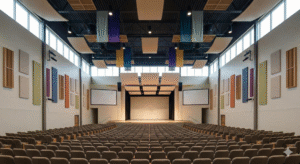
Large halls and auditoriums face a persistent challenge that undermines their core purpose: echo. When sound waves bounce repeatedly off hard surfaces, they create a distracting reverberant environment where speech becomes unintelligible and music loses its clarity. This acoustic nightmare transforms what should be inspiring spaces into frustrating venues that fail performers and audiences alike.
Echo problems don’t just annoy listeners. They render spaces unusable for their intended purposes, forcing event organizers to seek alternative venues and causing significant financial losses. Understanding how to eliminate these issues transforms problematic halls into acoustically superior environments.
Understanding Echo in Large Spaces
Echo occurs when sound reflects off hard surfaces like concrete walls, glass windows, tile floors, and high ceilings. In large halls, sound waves travel long distances before returning to listeners’ ears, creating distinct repetitions that muddle original sounds. The larger the space, the more severe the echo becomes.
Reverberation differs slightly from echo. While echo produces distinct repetitions, reverberation creates a prolonged decay of sound that blends into a cacophony. Both problems stem from the same root cause: excessive sound reflection from untreated surfaces.
How Acoustic Panels Transform Problem Spaces
Acoustic panels absorb sound energy rather than reflecting it back into the room. These specialized treatments capture sound waves within their porous structure, converting acoustic energy into minimal heat and preventing the reflections that cause echo.
Installing acoustic panels strategically throughout a hall dramatically reduces echo and reverberation. The panels work by interrupting the path of sound waves, preventing them from bouncing endlessly between parallel walls and hard surfaces. This creates a controlled acoustic environment where sound behaves predictably and pleasantly.
Modern acoustic panels come in various thicknesses, densities, and materials. Thicker panels with higher density absorb lower frequencies more effectively, while thinner panels handle mid and high frequencies. Combining different panel types creates comprehensive soundproofing solutions that address the full frequency spectrum.
Strategic Placement for Maximum Effectiveness
Random panel placement delivers mediocre results. Strategic installation based on acoustic principles yields dramatic improvements. Focus treatment on primary reflection points where sound waves first bounce before reaching listeners.
Install acoustic panels on sidewalls at the height where sound from the stage first reflects. This early reflection point critically affects speech intelligibility and music clarity. Treating these areas first provides the most noticeable improvement.
Back walls require substantial treatment because sound from the stage travels the longest distance before reflecting here. The resulting echoes arrive significantly delayed, creating the most distracting acoustic problems. Covering 60 to 80 percent of the back wall with absorptive treatment eliminates these late reflections.
Ceiling treatment addresses overhead reflections that contribute to overall reverberance. Suspended acoustic panels or directly mounted ceiling treatments prevent sound from bouncing between floor and ceiling indefinitely. This vertical control complements sidewall treatments for complete acoustic management.
Combining Materials for Optimal Results
Different surfaces require different approaches. Acoustic panels handle mid and high frequencies beautifully, while bass frequencies need specialized treatment. Bass traps placed in room corners absorb low frequency energy that regular panels miss.
Diffusion complements absorption by scattering sound in multiple directions rather than creating dead zones. Combining absorptive acoustic panels with strategic diffusion creates lively yet controlled acoustics perfect for music performance. The space sounds natural without the harshness of excessive echo.
Working with akinco Oman provides access to comprehensive acoustic solutions tailored to your specific hall dimensions and usage requirements. Professional acoustic assessment identifies problem frequencies and reflection points, ensuring treatment addresses your exact needs rather than applying generic solutions.
Addressing Specific Hall Challenges
Auditoriums with high ceilings face unique challenges. Sound travels farther vertically, creating longer delay times and more pronounced echoes. Installing acoustic panels on upper wall sections and suspended from high ceilings intercepts these problematic reflections before they build into overwhelming reverberance.
Glass walls and windows pose particular difficulties because their smooth, hard surfaces reflect sound almost perfectly. Mounting acoustic panels over glass or installing heavy curtains provides the absorption needed to tame these reflective surfaces without sacrificing natural light completely.
Stages themselves generate acoustic challenges. Hard stage floors and rear walls create a reverberant environment for performers that differs from what audiences experience. Treating backstage areas and the stage ceiling helps performers hear themselves accurately, improving performance quality.
Measuring Success
Professional acoustic measurements quantify improvements objectively. Reverberation time measurements show how quickly sound decays in the space. Optimal reverberation times vary by usage: speech venues need shorter times for clarity, while concert halls benefit from slightly longer reverb for musical richness.
Speech intelligibility testing measures what percentage of spoken words listeners understand clearly. Effective soundproofing solutions improve intelligibility scores dramatically, transforming spaces where audiences struggled to comprehend speakers into venues with crystal clear communication.
Before and after recordings demonstrate improvements convincingly. Recording the same content in the treated space reveals how effectively acoustic panels eliminated echo and created a professional sonic environment.
Long Term Benefits
Investing in proper acoustic treatment increases property value significantly. Venues with superior acoustics command higher rental rates and attract premium events. The initial treatment cost pays for itself through increased utilization and competitive advantages.
Properly installed acoustic panels require minimal maintenance. Quality materials resist sagging, discoloration, and degradation for decades. Unlike temporary solutions that need frequent replacement, professional acoustic treatment provides lasting value.
User satisfaction improves measurably in properly treated spaces. Performers deliver better presentations when they can hear themselves clearly. Audiences remain engaged when they can understand every word and appreciate musical nuance without fighting acoustic interference.
Solving echo problems begins with professional acoustic assessment. Understanding your space’s specific challenges allows targeted treatment that delivers maximum results with optimal efficiency. Generic approaches waste resources on unnecessary treatments while missing critical problem areas.
Acoustic panels transform large halls and auditoriums from acoustic nightmares into professional venues that serve their intended purposes beautifully. The investment in proper treatment pays dividends through improved functionality, user satisfaction, and competitive positioning in the marketplace.
Frequently Asked Questions
How many acoustic panels does a large hall need?
Coverage requirements vary based on hall size, shape, and existing materials. Most halls need treatment on 30 to 50 percent of total surface area for effective echo control. Professional acoustic analysis determines exact requirements for your specific space.
Can acoustic panels improve existing auditoriums without major renovation?
Yes. Acoustic panels mount directly to existing walls and ceilings without structural changes. Installation typically completes within days rather than weeks, minimizing disruption to scheduled events and normal operations.
Do acoustic panels work for both speech and music venues?
Absolutely. Proper panel selection and placement creates environments suitable for multiple uses. The key lies in balancing absorption and diffusion to maintain liveliness for music while ensuring clarity for speech.
How long do acoustic panels last?
Quality acoustic panels last 20 to 30 years with minimal maintenance. Materials resist moisture, fading, and physical degradation. This longevity makes them cost effective compared to temporary acoustic solutions.
Will acoustic treatment make the hall completely silent?
No. The goal is controlled acoustics, not dead silence. Effective treatment eliminates distracting echoes while preserving enough natural reverb to maintain warmth and presence in the space.
