


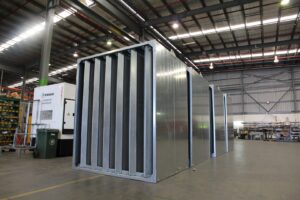
Heats, air conditioning and ventilation systems are necessary to keep the indoor environment comfortable in both office and residential premises. These systems also generate noise in the process of operation of the day and this may disrupt the normal operations. The noise can be caused by airflow, mechanical components or movement of air in the ducts. A sound attenuator is one of the effective solutions that can be used in managing this problem. This component is currently being selected by many building owners and facility managers to provide a less noisy and congenial environment. However, what is a sound attenuator and why does your HVAC system have an advantage?
What is Sound Attenuator?
A sound attenuator is a special system that is placed within HVAC ducts to minimize noise in the ductwork. Sometimes it is referred to as a duct silencer or muffler. A sound attenuator is primarily meant to absorb and contain sound waves before they penetrate occupied spaces. This creates less noisy places without interfering with the air circulation in the air conditioning and cooling.
A sound attenuator is designed with acoustic materials that make the sound energy weak. During airflow, these materials absorb the unwanted sounds that would have escaped to the rooms. This enables the whole system to be silent and smooth.
How a Sound Attenuator Works?
A sound attenuator makes use of both a mix of air passage management and sound absorption. Its operation may be explained by three easy principles:
Sound Absorption
Acoustic materials are contained in the sound attenuator, which breaks the sound waves as they pass through the duct. This helps in eliminating vibration and noisy airflow in places where individuals work, sleep or interact.
Smooth Air Movement
There is a sound attenuator which is meant to facilitate free flow of air through the ducts. This minimizes turbulence that is among the most prevalent forms of HVAC noise. The system is noisier with less air resistance and performance is not impacted.
Frequency Control
Different HVAC components such as fans, compressors, and motors, produce sounds of certain frequency. A sound attenuator is constructed to address and cut these frequencies and only acceptable levels of noise are allowed to go through.
The Reason Why You Should Have a Sound Attenuator on Your HVAC System
A sound attenuator is also important in enhancing comfort and performance. The reasons why you should install one in your HVAC system are listed below.
Reduces Noise Pollution
HVACs are associated with a lot of noise that can be heard because of air flowing and mechanical processes. The sound attenuator will cut this noise by a big margin and will provide a relaxing indoor atmosphere. This would be critical in big commercial properties where there are multiple units at work at the same time.
Improves Indoor Comfort
HVAC systems are disturbing and noisy. At home it is a disruption to rest. It influences concentration in offices. It is disruptive in hotels and hospitals. A sound attenuator is used to ensure there is a quiet environment that facilitates comfort and well being.
Improves Sound Sensitive Areas Performance
Recording rooms, conference halls, classrooms, and auditoriums will have to be where the sound is clear. Communication can be disrupted even by low noise of HVAC. A sound attenuator will make sure that background noise of the ventilating system has no effect on the clarity of speech or recording of audio.
Controls Vibrations and Structural Noise
The walls and ceilings transmit some HVAC noise in the form of vibrations. These vibrations may lead to problem in various rooms. These vibrations are absorbed by a sound attenuator and structural transmission of noise is prevented.
Supports Energy Efficiency
Contemporary sound attenuators are created in such a way that they reduce the noise and smooth the airflow. They do not impair cooling performance and ventilation. With efficient air movement, the HVAC system does not have to strain. This saves on energy and promotes efficiency in the long term.
Types of Sound Attenuators
Various buildings will have different solutions. The most used varieties of sound attenuators are:
Rectangular Sound Attenuators
They are commonly utilized in industrial places and commercial areas. They are good at noise suppression, but at the same time provide a smooth flow of air.
Round Sound Attenuators
They can be used in small ducts and spaces. They are typically installed in round duct systems, and they are simple to install.
Dissipative Sound Attenuators
These have sound-absorbing material such as fiberglass. They are frequently found in offices, hospitals, and high-performance HVAC systems.
Reactive Sound Attenuators
These are independent of the absorbing materials. They rather bend sound waves in such a manner that noise can be canceled. They are applicable in places where the airflow should not be obstructed.
The Question of Selecting the Ideal Sound Attenuator
In choosing a sound attenuator, the following things should be considered:
-
Determine the level of noise that needs to be decreased
-
Verify the dimension and pattern of the duct system
-
Select strong and quality material
-
Make sure that it is free of obstruction of air
An effective sound attenuator is one that has been selected appropriately to enhance the effectiveness and comfortability of your HVAC.
Good HVAC system should have a sound attenuator that should be added to the system in order to ensure a comfortable and peaceful interior atmosphere. It helps to minimize inconvenient noise, vibrations, and improves effective communication in the sensitive sphere. A sound attenuator is used to provide a more efficient and more comfortable environment in the case of a commercial facility, healthcare buildings, hotels, or residential spaces. When properly chosen and installed, it helps a great deal in increasing the overall performance of your HVAC system and in making it more comfortable every day.
